Money Order: What It Is, How to Fill It Out, Where to Buy
If you live in the United States and need to pay a government, consulate or service fee, sooner or later you’ll hear: “payment must be made by money order.” Many people have never used one — and a money order bought in the wrong place or made out to the wrong name gets rejected, along with the application that depended on it.
What is a money order?
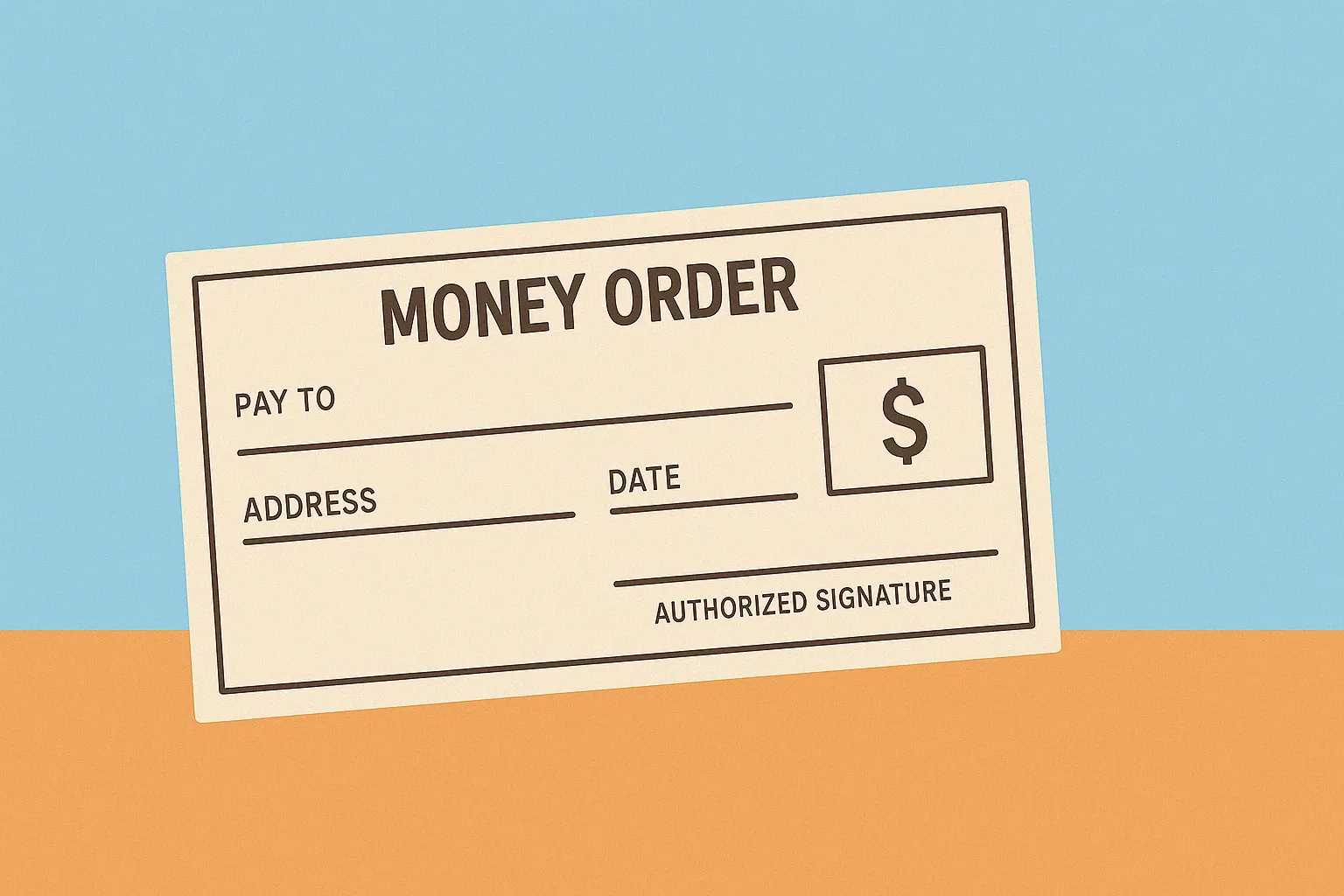
A money order is a prepaid payment order that works like a check. The difference is that you pay up front, in cash or with a debit card, and the document is issued for a fixed amount by an authorized institution. That’s why it’s accepted where a personal check isn’t: whoever receives it knows the money is guaranteed.
Why use a money order?
- It’s safer than mailing cash.
- You don’t need a bank account to buy one.
- It’s accepted by many government agencies, consulates and businesses.
- It’s traceable: with the receipt, you can prove payment and request a replacement if it’s lost.
Where to buy a money order
The most common places in the U.S. are:
- USPS (the U.S. Postal Service), at virtually any post office
- Western Union
- MoneyGram
Many grocery stores and pharmacies sell Western Union or MoneyGram money orders. One caution: consulates usually require a USPS money order. If your payment is going to a consulate, buy it at the post office.
How much does a USPS money order cost?
As of October 2026, USPS charges:
| Money order amount | Fee |
|---|---|
| Up to $500 | $2.65 |
| $500.01 to $1,000 | $3.75 |
Each domestic money order can be for up to $1,000. You pay with cash or a debit card — credit cards are not accepted.
How to fill out a money order
The clerk prints the amount; the rest is up to you. The fields vary slightly by issuer, but they’re always these:
- Pay to / Pay to the order of: the name of whoever will receive it, written exactly as that person or agency requires.
- From / Purchaser: your name and address.
- Memo: a reference number, such as an account, case or order number.
- Purchaser’s signature: some designs have this field on the front. Don’t sign the back — that’s for the person receiving it.
Fill it out in pen, with no cross-outs. And keep the receipt: you need it to check the status and request a replacement.
What if a money order is lost or stolen?
You can’t stop payment on a money order, but you can request a replacement. With USPS, you take the receipt to a post office and open a Money Order Inquiry. Confirmation can take up to 30 days, the investigation up to 60, and there’s a processing fee. USPS money orders never expire, and they can be cashed for free at any post office with a photo ID.
Which services might require a money order?
Almost any process involving a government or consulate fee accepts — and often requires — a money order. These are the ones we see most:
- Brazilian passport renewal: the consular fee is paid with a USPS money order. See also how much renewal costs in 2026.
- Birth registration and powers of attorney at the consulate: other consular services where a money order is usually part of the application. Learn what a power of attorney is.
- U.S. passport: applications made at an acceptance facility are usually paid by check or money order.
- Immigration documents: certified translations, certified copies and declarations.
- New Jersey MVC services: driver’s licenses, vehicle titles and registrations.
- Document apostille: so your U.S. documents are valid abroad.
Don’t lose your application over a payment mistake
A money order bought in the wrong place or made out to the wrong name gets sent back — and the application you waited weeks to schedule starts over. In our services, we tell you where to buy it, who to make it out to and for how much, and we prepare the documents that go with it.
Talk to us or call (973) 344-5032. We help in Portuguese, Spanish and English.
USPS fees and rules can change. The amounts above reflect what USPS publishes as of this update.
Updated on October 16, 2026